Micromaxx|Your Rocket|The Wadding|The Motor|The Igniter|The Launch Controller|The Launch Pad
Model rockets are not toys - you can't simply plug them
in and turn them on expecting them to work. After all they are real rockets
in miniature so just like their big brothers and sisters, a number of things
need to work perfectly and come together at the right time to ensure a
perfect launch. Here's a few things you need to address to achieve that
perfection. Note unless otherwise stated references are to Quest model
rockets (as opposed to Advanced, High Power or Amateur rockets).
Undertake these checks on your rocket before flight,
even though your kit may be a Ready
To Fly model.
Micromaxx
Micromaxx kits require attention to detail to achieve
successful consecutive launches. Use only brand new Titanium,
Energizer or Duracell alkaline
batteries. Cheaper 9v batteries are not suitable for use with the micromaxx
igniter (lithium batteries will not fit the controller). The launch circuitry
can be tested by installing the igniter, battery, and safety key, and momentarily
pressing the launch button. The igniter should glow red hot. Release the
launch button immediately the igniter begins to glow, otherwise it will
soon melt and have to be discarded.
When the rocket is seated on the igniter make sure the
igniter is fully inserted and centred in the nozzle of the rocket motor.
This is more easily achieved by removing the launch rod, seating the rocket
correctly on the igniter and then carefully re-installing the launch rod.
Note that due to the differing weight and aerodynamic shape of each of
the rockets in the range, not all models will achieve the expected 50m
altitudes. Whereas the Raw Fusion, Vector 1 and Tomahawk Cruise Missile
will achieve altitudes more than sufficient for back yard launching, the
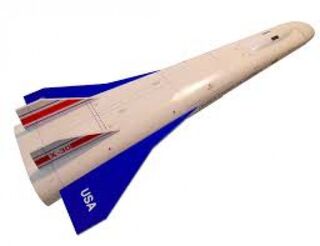
Space Shuttle, Saturn V, UFO and SR71 Blackbird, will not fly very high
at all, due to their higher weight and aerodynamic drag. Indicative altitudes
might be: Saturn V and Space Shuttle - 10 m, UFO and Space Fighter - 15m,
Tomahawk and SR71 - 20m, Raw Fusion and Vector 1 - 50m.
Don't use 'gripper tabs' to attach shroud lines to the
canopy or streamer. - these will clog the body tube and will eventually
lose their adhesion. Instead use refill pad paper reinforcing rings. Stick
them on your recovery device, puncture though the centre hole, thread the
shroud lines through the hole and tie onto the canopy with a double knot.
Pull the lines firmly to make sure they won't come off when the recovery
device deploys. Using a permanent marker, write some contact details on
your recovery device to increase your chances of getting the rocket back
should you lose it.
Make sure the launch lug
is strictly parallel to the body tube and there are no stickers/decals
or other hindrances in front of or behind the lug. These can cause the
rocket to jam on the launch rod. (Note a poorly aligned body tube glued
to the fin unit can also cause a jam on the rod. Check
it!). If the launch lug is moulded to the plastic fin cannister,
make sure any plastic 'flashing' is removed from the inside of the launch
lug moulding.
The nose cone must
be a slip fit in the body tube, but it mustn't be too loose or the cone
may release at 'burn out' when the rocket decelerates. Use masking tape
around the shoulder of the nose cone to fix a cone which is too loose.
Hold the cone tightly in one hand and pull on the shock with the other,
to ensure your knot won't fail when the recovery device deploys. Make sure
when gluing the engine mount components together that excess glue does
not end up inside the engine mount. This will impede the fitting
of the motor. Wipe away any excess glue immediately. Of course don't forget
to glue the engine mount in - yes it does happen!
Upgrade tip: Smearing
a layer of thin super glue around the nose cone end of the body
tube and the exposed end of the engine mount tube will prevent fraying
and ripping, and will extend the life of your rocket.
You must use wadding and it must be flameproof. Make sure you use the recommended number of sheets and the 'wadding ball' touches the sides of the body tube.
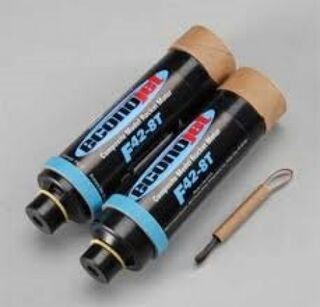
Make sure the motor is the right type recommended for your model - the delay time is particularly important. This is the last number of the code printed on the motor - check it with the recommended motor per your kit's instructions. Using the wrong motor delay will cause you a lot of grief! The motor must be a slip fit and slide easily into into the engine mount. Never force the motor into the mount. Instead carefully remove the labelling sticker from around the motor, or no more than two wrappings of paper from around the paper casing. Lightly dust a 'peeled' motor with talcum powder before inserting into the mount, and get into the habit of relabelling the motor with a pen so you can still identify it, if, for some reason you decide not to launch. Get used to checking the composition of the motor nozzle (the hole where the igniter is inserted). It will either be clay (white) or ceramic (black) - a black ceramic type nozzle signifies a European manufactured motor and will warn you that the delay time (coasting time) may be significantly longer than expected - a 3 second delay can be more like 5 seconds, a 4 second delay can be more like 6 seconds, and a 5 second delay more like 7 seconds. Adjust the angle on your launch rod upright accordingly. Taking a long walk is better than reading the last rites!
You will likely encounter only two types of igniter - the copperhead and the nichrome igniter. The former looks like one piece of copper with a black tip (the squib), and the latter has two silver or copper wires. The nichrome igniter has less resistance than the copperhead so requires less current to fire, however it is brittle and fragile and so it is best not to use a plastic nozzle plug to hold the igniter in place. Instead use masking tape across the nozzle. The squib must be touching the propellant - (the black stuff you can see inside the nozzle). Using a plug can cause the wires to come together causing a short. And that's also why you don't remove the paper tape on the (silver) nichrome igniter which keeps those wires apart! While the copperhead igniter is 'bulletproof' it requires more current to fire, so your batteries must be up and ready and of the right capacity (see Launch Controller below). Don't muck about with the tiger tail wrapper (those orange and black stickers), instead insulate one jaw of each alligator clip on your launch controller (also explained below). For tips on how to bring a dead copperhead igniter to life, phone 9-624 391. [If you know how to measure the resistance of an igniter, a nichrome igniter will typical measure about 0.6 ohms, a copperhead 8-10 ohms].
The battery (s) you use in your launch controller are
so often the sole determinant of whether or not you have a successful launch.
You must use the proper battery(s) and they must be new batteries. The
power (milli-amp hours) produced by your battery is the key, not
necessarily the voltage. Lithium and alkaline batteries, which together
have a voltage rating of at least 6v-9v, are the only batteries suitable
for model rocket launch controllers. Lithium batteries are the best, standard
(carbon/zinc) and AA or 9V type rechargeable batteries will simply cause
you a lot of grief, so don't use them. Note the new Titanium battery is
not a new 'formula', it is simply a more efficient alkaline battery. So
in order of efficiency, from best to next best, when using the standard
launch controllers, fit:
Lithium AA (2950 milliamps)
Titanium AA (about 2800 milliamps)
Alkaline AA (2850 milliamps)
Lithium batteries have a flatter discharge curve which
means the current stays 'up' for a longer time than alkaline batteries.
Insulating one jaw of each alligator clip (with masking
tape or a piece of model aircraft fuel tubing) is highly recommended and
means you can do way with the orange tiger tail stickers. You can also
then position the clips anywhere on a copperhead igniter and of course
the controller can still be used with nichrome igniters. The jaw which
does not have the ignition lead soldered to it is the one the insulate.
'Flip' each alligator clip when attaching to the igniter so that one uninsulated
jaw is touching one side of the igniter and the other uninsulated
jaw touches the other side. Lightly sand your safety
key and always keep it clean. Your objective is a fat, bright continuity
light from AA battery type controllers and an audible consistent beeping
from 9v units.
Upgrade Tip: solder a female Tamiya type connector into your (4 x AA battery type) launch controller (see Aerospace Education magazine July 1997 issue ) so that you can use a rechargeable NiCad 7.2 battery pack with your controller (note the controller bulb will only just take the extra voltage - don't despair if you blow the bulb, spares can be ordered).
Pin down your launch pad with tent pegs, particularly on a windy day. Also, make sure the launch rod is a tight fit in its mounting hole where it fits into the base of the launcher. If using a two piece rod, the two pieces must be a tight fit into each other and have no kinks. You don't want your rocket taking the launch rod with it, when it lifts off! Sand the rod lightly before launch and coat it with a thin layer of petroleum jelly (vaseline). Always use the 'stand off'' which ensures igniter clips do not touch the jet deflector plate and cause a 'short'. If you lose the 'stand off'' use a burnt out motor instead. Test fit your rocket on the rod to ensure it slides freely - very important Make sure the rod safety cap is replaced on the rod after each launch.
Upgrade Tip Your two piece rod can be replaced by one piece rod, .9 m to 1 m long, 3 mm in diameter. Stainless steel rod is best, however piano wire from a hobby shop will do the job.
For further information click Questions and Answers. For assistance contact: Aerospace Education
Top
home